During infancy
Infants are very susceptible of the impressions of cold; a proper regard, therefore, to a suitable clothing of the body, is imperative to their enjoyment of health. Unfortunately, an opinion is prevalent in society, that the tender child has naturally a great power of generating heat and resisting cold; and from this popular error has arisen the most fatal results. This opinion has been much strengthened by the insidious manner in which cold operates on the frame, the injurious effects not being always manifest during or immediately after its application, so that but too frequently the fatal result is traced to a wrong source, or the infant sinks under the action of an unknown cause.
The power of generating heat in warm-blooded animals is at its minimum at birth, and increases successively to adult age; young animals, instead of being warmer than adults, are generally a degree or two colder, and part with their heat more readily; facts which cannot be too generally known. They show how absurd must be the folly of that system of "hardening" the constitution (to which reference has been before made), which induces the parent to plunge the tender and delicate child into the cold bath at all seasons of the year, and freely expose it to the cold, cutting currents of an easterly wind, with the lightest clothing.
The principles which ought to guide a parent in clothing her infant are as follows:
The material and quantity of the clothes should be such as to preserve a sufficient proportion of warmth to the body, regulated therefore by the season of the year, and the delicacy or strength of the infant's constitution. In effecting this, however, the parent must guard against the too common practice of enveloping the child in innumerable folds of warm clothing, and keeping it constantly confined to very hot and close rooms; thus running into the opposite extreme to that to which I have just alluded: for nothing tends so much to enfeeble the constitution, to induce disease, and render the skin highly susceptible to the impression of cold; and thus to produce those very ailments which it is the chief intention to guard against.
In their make they should be so arranged as to put no restrictions to the free movements of all parts of the child's body; and so loose and easy as to permit the insensible perspiration to have a free exit, instead of being confined to and absorbed by the clothes, and held in contact with the skin, till it gives rise to irritation.
In their quality they should be such as not to irritate the delicate skin of the child. In infancy, therefore, flannel is rather too rough, but is desirable as the child grows older, as it gives a gentle stimulus to the skin, and maintains health.
In its construction the dress should be so simple as to admit of being quickly put on, since dressing is irksome to the infant, causing it to cry, and exciting as much mental irritation as it is capable of feeling. Pins should be wholly dispensed with, their use being hazardous through the carelessness of nurses, and even through the ordinary movements of the infant itself.
The clothing must be changed daily. It is eminently conducive to good health that a complete change of dress should be made every day. If this is not done, washing will, in a great measure, fail in its object, especially in insuring freedom from skin diseases.
During childhood
The clothing of the child should possess the same properties as that of infancy. It should afford due warmth, be of such materials as do not irritate the skin, and so made as to occasion no unnatural constriction.
In reference to due warmth, it may be well again to repeat, that too little clothing is frequently productive of the most sudden attacks of active disease; and that children who are thus exposed with thin clothing in a climate so variable as ours are the frequent subjects of croup, and other dangerous affections of the air- passages and lungs. On the other hand, it must not be forgotten, that too warm clothing is a source of disease, sometimes even of the same diseases which originate in exposure to cold, and often renders the frame more susceptible of the impressions of cold, especially of cold air taken into the lungs. Regulate the clothing, then, according to the season; resume the winter dress early; lay it aside late; for it is in spring and autumn that the vicissitudes in our climate are greatest, and congestive and inflammatory complaints most common.
With regard to material (as was before observed), the skin will at this age bear flannel next to it; and it is now not only proper, but necessary. It may be put off with advantage during the night, and cotton maybe substituted during the summer, the flannel being resumed early in the autumn. If from very great delicacy of constitution it proves too irritating to the skin, fine fleecy hosiery will in general be easily endured, and will greatly conduce to the preservation of health.
It is highly important that the clothes of the boy should be so made that no restraints shall be put on the movements of the body or limbs, nor injurious pressure made on his waist or chest. All his muscles ought to have full liberty to act, as their free exercise promotes both their growth and activity, and thus insures the regularity and efficiency of the several functions to which these muscles are subservient.
The same remarks apply with equal force to the dress of the girl; and happily, during childhood, at least, no distinction is made in this matter between the sexes. Not so, however, when the girl is about to emerge from this period of life; a system of dress is then adopted which has the most pernicious effects upon her health, and the development of the body, the employment of tight stays, which impede the free and full action of the respiratory organs, being only one of the many restrictions and injurious practices from which in latter years they are thus doomed to suffer so severely. Infants are very susceptible of the impressions of cold; a proper regard, therefore, to a suitable clothing of the body, is imperative to their enjoyment of health. Unfortunately, an opinion is prevalent in society, that the tender child has naturally a great power of generating heat and resisting cold; and from this popular error has arisen the most fatal results[...]Labels: children, parenting, parenting skills, suitable clothing children
Setelah mengetahui gejala awal dari autis dan dilakukan observasi yang sangat hati-hati dan mendetail, maka langkah selanjutnya adalah mengetahui bagaimana menghadapi balita yang terkena autis.
PENGOBATAN
Orang tua memainkan peran yang sangat penting dalam membantu perkembangan anak. Seperti anak-anak yang lainnya, anak autis terutama belajar melalui permainan. Bergabunglah dengan anak ketika dia sedang bermain, tariklah anak dari perilaku dan ritualnya yang sering diulang-ulang, dan tuntunlah mereka menuju kegiatan yang lebih beragam. Misalnya, orang tua mengajak anak mengitari kamarnya, kemudian tuntun mereka ke ruang yang lain. Orang tua perlu memasuki dunia mereka untuk membantu mereka masuk ke dunia luar.
Kata-kata pujian karena telah menyelesaikan tugasnya dengan baik, kadang tidak berarti apa-apa bagi anak autis. Temukan cara lain untuk mendorong perilaku yang baik dan untuk mengangkat harga dirinya. Misalnya berikan waktu lebih untuk bermain dengan mainan kesukaannya jika anak telah menyelesaikan tugasnya dengan baik.
Anak autis belajar lebih baik jika informasi disampaikan secara visual (melalui
gambar) dan verbal (melalui kata-kata). Masukkan komunikasi augmentatif ke dalam kegiatan rutin sehari-hari dengan menggabungkan kata-kata dan foto, lambang atau isyarat tangan untuk membantu anak mengutarakan kebutuhan, perasaan dan gagasannya.
Tujuan dari pengobatan adalah membuat anak autis berbicara. Tetapi sebagian anak autis tidak dapat bermain dengan baik, padahal anak-anak mempelajari kata-kata baru melalui permainan. Sebaiknya orang tua tetap berbicara kepada anak autis, sambil menggunakan semua alat komunikasi dengan mereka, apakah berupa isyarat tangan, gambar, foto, lambang, bahasa tubuh maupun teknologi.
Jadwal kegiatan sehari-hari, makanan dan aktivitas favorit, serta teman dan anggota
keluarga lainnya bisa menjadi bagian dari sistem gambar dan membantu anak untuk berkomunikasi dengan dunia di sekitarnya.
Program intervensi dini
Hal terpenting yang bisa dilakukan oleh orang tua adalah menemukan program intervensi dini yang baik bagi anak autis. Tujuan pertama adalah menembus tembok penghalang interaksi sosial anak dan menitikberatkan komunikasi dengan orang lain melalui cara menunjuk jari, mengguanakan gambar dan kadang bahasa isyarat serta kata-kata. Program intervensi dini menawarkan pelayanan pendidikan dan pengobatan untuk anak-anak berusia dibawah 3 tahun yang telah didiagnosis mengalami ketidakmampuan fisik atau kognitif.
Program intervensi dini terdiri dari:
- Terapi fisik dan terapi okupasional (pengobatan dengan memberikan pekerjaan/kegiatan
tertentu)
- Terapi wicara dan bahasa
- Pendidikan masa kanak-kanak dini
- Perangsangan sensorik.
Program intervensi dini akan membantu orang tua dan anak autis pindah dari intervensi dini ke dalam sistem sekolah umum. Program ini juga akan membantu memilihkan lingkungan yang paling tepat untuk pendidikan anak autis, apakah di sekolah biasa atau di kelas khusus anak austik yang menawarkan pendidikan dan pelayanan pengobatan yang lebih intensif dengan jumlah murid yang terbatas.
Program pendidikan untuk anak autis sangat terstruktur, menitikberatkan kepada
kemampuan berkomunikasi dan sosialisasi serta teknik pengelolaan perilaku positif.
Strategi yang digunakan di dalam kelas sebaiknya juga diterapkan di rumah sehingga
anak memiliki lingkungan fisik dan sosial yang tidak terlalu berbeda.
Dukungan pendidikan seperti terapi wicara, terapi okupasional dan terapi fisik
merupakan bagian dari pendidikan di sekolah anak autis. Keterampilan lainnya, seperti memasak, berbelanja atau menyebrang jalan, akan dimasukkan ke dalam rencana pendidikan individual untuk meningkatkan kemandirian anak.
Tujuan keseluruhan untuk anak adalah membangun kemampuan sosial dan berkomunikasi
sampai ke tingkat tertinggi atau membangun potensinya yang tertinggi.
Tidak mudah menerima kenyataan bahwa anak anda adalah seorang autis. Orang tua
seringkali mengalami tahapan emosional berupa duka, menyangkal, marah, depresi dan menerima. Konsultasi dengan ahli dapat membantu keluarga menerima diagnosis ini, melangkah ke depan dan mencari jalan terbaik untuk membantu anak mencapai potensinya yang tertinggi.
Pada masa remaja, beberapa perilaku agresif bisa semakin sulit dihadapi dan sering
menimbulkan depresi. Kadang obat-obatan bisa membantu meskipun tidak dapat menghilangkan penyebabnya. Haloperidol terutama digunakan untuk mengendalikan perilaku yang sangat agresif dan membahayakan diri sendiri. Fenfluramin, buspiron, risperidon dan penghambat reuptake serotonin selektif (fluoksetin, paroksetin dan sertralin) digunakan untuk mengatasi berbagai gejala dan perilaku pada anak autis.
Beberapa anak autis tumbuh dan menjalani hidup yang mandiri. Yang lainnya selalu
membutuhkan dukungan dari lingkungan tempat tinggal dan tempatnya bekerja. Banyak ahli yang berpendapat bahwa masa depan anak autis sangat tergantung kepada besarnya kemampuan berbahasa yang dicapai oleh anak ketika berusia 7 tahun.
Do You Know?
Constructing Your Child's Healthy Sense of Self Esteem
Your child's self esteem is their mental foundation. A self-assured child is confident, secure, happy, well-adjusted and successful. They can solve problems that come their way, and it thrives under a loving parent's nurturing care.
What are some good ways to built self esteem in your child?
Most importantly, accept your child for who they are, and help them do the same. Teach your child that nobody is perfect, and that everyone makes mistakes. Show them how to learn and grow from their mistakes, and let them know that you also make mistakes. Children with high self esteem are able to take lessons from mistakes and apply them down the road. A child with low self esteem become frustrated and resort to self-depreciating behavior, such as calling themselves 'stupid' and vowing to 'never try that again.
Help your child discover their abilities and talents, and encourage outlets for them to build on and improve them. Praise a child not only for improvements in abilities and skills, but also for the traits they naturally possess.
Encourage your child to make positive choices. Open an honest dialog with your child and discuss the possibilities with them. Children who learn skills for making positive choices when they are younger are well-prepared for the tougher choices they have to make when they are older.
Ensure that you spend lots of quality time with your child, at least once a week. Whether you are shooting baskets or going out to grab a hamburger, take time to talk and keep in touch. If you find it difficult to squeeze in quality time during a hectic week, take the time to talk about things during the drive to school or while they are helping you put the groceries away.Setelah mengetahui gejala awal dari autis dan dilakukan observasi yang sangat hati-hati dan mendetail, maka langkah selanjutnya adalah mengetahui bagaimana menghadapi balita yang terkena autis.Labels: autism, Autism Symptoms, Autism therapies, autism therapy, child parenting skills, parenting info, parenting skills, positive parenting skills
It has been shown many times over in research studies that a parent who is involved in their child's education has a positive impact. It's reflected in improved grades and test scores, strong attendance, a higher rate of homework completion, higher graduation rates, improved attitudes and behaviors in the child, as well as the child being more likely to become involved in positive extra-curricular activities. Send out the message early in your child's education that your home is an involved and active supporter of their learning.
Probably the most important element of a positive learning environment at home is structure. But what is too little or too much? If we're too lenient or expect too little, your child may become disorganized or unmotivated. If we're too rigid and strict, it can cause undue pressure or cause your child to feel unable to deliver on your expectations.
So what's the best way to meet in the middle and create a positive learning environment for your child at home?
Help your child develop a work area where they can study and focus without being interrupted. Children usually do better when they have a private study area away from interruption. If your child prefers doing their work at the kitchen table, make sure other family members understand the kitchen is off-limits during study time. Make sure your child has plenty of supplies and reference materials available and that the area has plenty of light. Regardless of its location, ensure the area is quiet and that your child can study and work uninterrupted.
Agree on a regular time for studying. To help your child make homework a habit, schedule a set time each day for homework. Perhaps breaking study time up into smaller increments would work better for your child than one solid period. Work with your child to find out what works best for them. In addition, be sure your child has a sufficient break between the time they arrive home from school before they sit down to work in order to 'decompress' from their school day.
Help your child develop a method of keeping track of homework assignments. This can be a difficult chore for some students. Developing a successful way of keeping track of assignments then scratching them off as completed helps them develop a productive method for accomplishing tasks later in life.
Develop a positive line of communication with your child's teacher. Teachers are usually very willing and excited to work with an involved parent to help the child's overall success in school. Whether it's notes sent back and forth in your child's backpack or an e-mail correspondence, make sure your teacher knows your open for suggestions as how to better assist them in the homework and study process at home.It has been shown many times over in research studies that a parent who is involved in their child's education has a positive impact. It's reflected in improved grades and test scores, strong attendance, a higher rate of homework completion, higher graduation rates, improved attitudes and behaviors in the child, as well as the child being more likely[...]Labels: child parenting skills, good parenting, parenting info, parenting skills, positive influence, positive learning, positive parenting

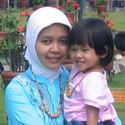 Saya adalah seorang ibu. Sebagai full mother banyak hal menarik yang saya jumpai setiap saat, dan banyak pula pertanyaan-pertanyaan yang harus saya cari jawabannya. Informasi dan jawaban bisa kita peroleh darimana saja, baik dari keluarga, teman, televisi, internet, atau dari pengalaman kita sendiri.